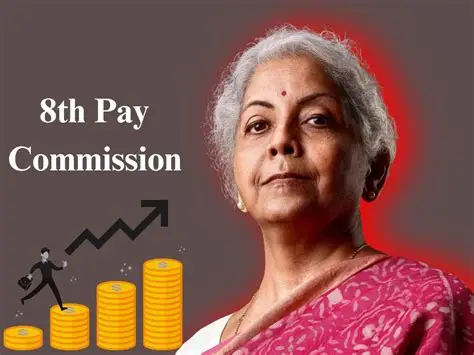
A key meeting tied to the proposed 8th Pay Commission has begun, placing salary revision and pension reform back in focus for millions of government employees.
The drafting committee convened to review core demands, including a proposed ₹54,000 minimum basic pay, a 7% annual increment structure, and restoration of the Old Pension Scheme (OPS).
The discussions come amid rising expectations from central government employees and pensioners who have been seeking clarity on the next pay revision cycle.
While no final decision has been announced, the meeting marks the first formal step in shaping recommendations that could affect pay scales, allowances and retirement benefits nationwide.
What Is the 8th Pay Commission?

A Pay Commission is typically set up by the Government of India to review and recommend changes to salary structures of central government employees and pensioners.
The previous panel, the 7th Central Pay Commission, submitted its recommendations in 2015, which were implemented from January 1, 2016.
With inflation trends and cost-of-living concerns rising, employee unions have been pushing for early discussions on the next revision cycle.
An official familiar with the meeting said the drafting phase is intended to “collect inputs and examine feasibility before any structured proposal is moved forward.”
Key Demands on the Agenda
₹54,000 Minimum Basic Pay Proposal
One of the headline demands is fixing the minimum basic pay at ₹54,000 per month.
Employee representatives argue that current pay structures no longer align with rising living costs in major cities.
A union leader present during consultations said, “The minimum wage must reflect present economic realities. Our members expect a rational revision.”
No formal endorsement has been issued, and officials indicated that financial implications will be reviewed in detail.
7% Annual Increment Structure
Another major point under discussion is a proposed 7% annual salary increment.
Currently, government employees receive a fixed annual increment rate under existing rules. The suggested revision aims to ensure pay progression keeps pace with inflation.
A senior finance official noted during preliminary deliberations, “Any change to the increment formula requires comprehensive fiscal evaluation.”
The government is expected to weigh revenue projections and expenditure commitments before moving ahead.
Restoration of Old Pension Scheme (OPS)
Perhaps the most sensitive issue is the demand to restore the Old Pension Scheme for employees currently covered under the National Pension System (NPS).
OPS provides a defined benefit pension based on last drawn salary, while NPS operates on a contributory model linked to market returns.
Employee associations have repeatedly called for reconsideration of pension structures, citing retirement security concerns.
A representative from a central employees’ federation said, “Pension certainty is a major issue for staff. This remains a top priority in our discussions.”
The matter has broader fiscal implications, and the central government has not indicated any policy shift so far.
Timeline of the Current Developments
The drafting committee meeting marks an early-stage consultation.
No formal 8th Pay Commission has been officially constituted yet, according to publicly available government notifications.
However, employee bodies have intensified engagement over the past several months.
Sources suggest that internal assessments, financial modeling and stakeholder inputs will shape any future announcement.
Why This Matters to Government Employees
Salary revisions under Pay Commissions typically affect over one crore individuals, including serving central government employees, defense personnel and pensioners.
Changes to basic pay influence allowances such as House Rent Allowance (HRA), Dearness Allowance (DA) and retirement benefits.
Even incremental adjustments can significantly alter long-term earnings and pension calculations.
For employees approaching retirement, clarity on pension rules carries particular importance.
Government Position So Far
The central government has not issued a formal statement confirming the establishment of the 8th Pay Commission.
Officials have indicated that fiscal prudence remains a priority.
A senior government source said, “All proposals must align with broader economic stability and budgetary capacity.”
The Finance Ministry is expected to evaluate financial sustainability before any public notification is made.
Public and Employee Reaction
Employee unions have welcomed the start of structured discussions but remain cautious.
Several federations have indicated they will continue consultations and representations.
On social media platforms, discussions have centered on minimum wage revision and pension parity.
Financial analysts have pointed out that any large-scale salary overhaul would have significant budgetary impact.
Key Facts at a Glance
| Event | Location | Date | Who Is Affected | Current Status | What Readers Should Know |
|---|---|---|---|---|---|
| 8th Pay Commission drafting meeting | New Delhi | Recent meeting | Central government employees & pensioners | Drafting stage | No formal commission yet announced |
| ₹54,000 minimum pay proposal | Under discussion | Ongoing consultations | Entry-level employees | Proposal stage | Financial feasibility under review |
| 7% annual increment demand | Draft agenda | Ongoing | All eligible employees | Under evaluation | Would alter pay progression structure |
| OPS restoration demand | National level issue | Continuing debate | NPS-covered employees | No policy change announced | Pension reform remains sensitive topic |
What Happens Next?
The drafting committee is expected to compile inputs and submit internal notes for review.
If the government decides to move forward, a formal notification establishing the 8th Pay Commission would be issued.
That process typically includes appointment of a chairperson, member panel and defined terms of reference.
Until then, discussions remain exploratory.
Frequently Asked Questions (FAQs)
Has the 8th Pay Commission been officially announced?
No formal notification establishing the 8th Pay Commission has been issued yet.
What is the proposed new minimum salary?
Employee representatives have proposed fixing the minimum basic pay at ₹54,000 per month.
Is the 7% annual hike confirmed?
No. The 7% increment structure is under discussion and has not been approved.
Will the Old Pension Scheme be restored?
There is currently no official decision restoring OPS for NPS-covered employees.
Who will benefit if changes are approved?
Central government employees, pensioners and certain defense personnel would be affected.
When could new pay scales take effect?
That would depend on formal constitution of the commission and acceptance of recommendations.
Conclusion
The drafting committee meeting signals the beginning of structured dialogue around the proposed 8th Pay Commission.
Key demands — including a ₹54,000 minimum basic pay, 7% annual increments and pension reforms — remain under review.
No formal policy decisions have been announced.
Government employees and pensioners will be watching closely for any official notification regarding the commission’s constitution and timeline.









Leave a Comment