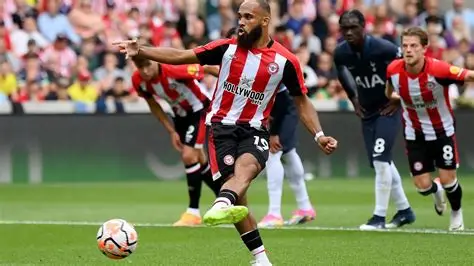
Brentford suffered a costly setback after a Panenka-style penalty failed to find the net, raising questions about whether there is ever a right moment to use the risky technique. The missed attempt proved decisive in the team’s match outcome.
The Panenka—a delicate chip down the center of the goal—has long divided opinion among football fans and analysts. When executed correctly, it’s celebrated as audacious and clever. When it fails, it can leave a team exposed and players facing heavy criticism.
In this instance, Brentford’s choice to employ the move in a high-pressure moment illustrates both the skill required and the gamble involved. The incident has reignited discussions about penalty psychology, situational awareness, and timing.
Analysts point out that the Panenka is rarely the safest option, particularly in critical games where a single miss can alter league points or tournament progress.
What Happened: Brentford’s Missed Panenka
During the match, Brentford was awarded a penalty in the latter stages. Opting for a Panenka, the player chipped the ball softly toward the center of the goal. Unfortunately for Brentford, the goalkeeper read the move and easily saved it.
The miss shifted momentum to the opposing team, who capitalized soon after. Fans and pundits debated whether a conventional strike would have been a safer choice under such circumstances.
Coach statements after the game suggested that the penalty decision reflected confidence in the player’s technique, but admitted the gamble did not pay off.
Key Match Summary
| Event | Location | Date | Who is affected | Current status | What readers should know |
|---|---|---|---|---|---|
| Panenka penalty attempt | Brentford stadium | March 2026 | Brentford FC, players, fans | Missed | High-pressure situation backfired |
| Match outcome | Brentford vs Opponent | March 2026 | Teams and supporters | Brentford lost/points dropped | Timing and technique debated |
| Player involved | Brentford | March 2026 | Fans, coaching staff | Criticism online | Psychological pressure noted |
| Momentum shift | Match | March 2026 | Teams | Opponent scored after miss | Miss changed game flow |
| Tactical lesson | Football analysis | March 2026 | Coaches, analysts | Not advised in all situations | Panenka is high-risk, high-skill |
Background: The Panenka Penalty
Named after Czech player Antonín Panenka, the penalty involves chipping the ball gently down the center while the goalkeeper dives to either side. It is often used to showcase audacity and confidence.
The move is rare in professional football because of the high risk. Success is celebrated as genius; failure can be humiliating. Timing, match context, and the goalkeeper’s behavior all influence whether a Panenka succeeds.
Football analyst David Morales explained:
“A Panenka requires perfect reading of the goalkeeper and nerves of steel. Any miscalculation, especially in a tight game, can be extremely costly.”
Timeline of the Brentford Penalty Incident
- Early in second half: Brentford awarded a penalty after a foul in the box.
- Penalty decision: Player chooses a Panenka technique.
- Execution: Ball chipped down the center, goalkeeper anticipates and saves.
- Immediate consequence: Opponent regains momentum, eventually scoring or retaining control.
- Post-match reaction: Fans, analysts, and social media debate timing and risk.
The episode highlights how a single penalty decision can influence match dynamics and fan sentiment.
Public and Fan Reaction
Social media erupted with opinions about the penalty choice. Some praised the boldness of the attempt, while others criticized the lack of situational judgment.
Pundits noted that Panenkas are best reserved for moments where the stakes are lower or when the kicker has previously mastered the technique in similar contexts.
Football fan forums highlighted the psychological impact of a failed Panenka, noting that it can shake confidence for the remainder of the game.
Lessons for Players and Coaches
- Assess match context: High-pressure situations may call for safer penalty execution.
- Know your skill level: Only attempt a Panenka if confident in technique and reading the goalkeeper.
- Understand psychological impact: A failed Panenka can affect team morale and player confidence.
Coach statements suggested future penalties would consider context, opposition tendencies, and pressure levels before attempting high-risk techniques.

What Happens Next
Brentford will look to recover points in upcoming fixtures. The player involved may receive guidance on when to deploy audacious techniques in high-stakes matches.
Football analysts will continue using this incident to teach lessons in risk management and penalty strategy. Clubs across leagues often review such plays in training to balance flair with effectiveness.
Fans and commentators will watch future matches to see if Brentford adjusts its approach to penalties after this high-profile miss.
FAQ
What is a Panenka penalty?
A Panenka is a lightly chipped shot down the center of the goal, named after Czech player Antonín Panenka.
Why did Brentford’s Panenka fail?
The goalkeeper anticipated the chip and saved the ball, highlighting the risk involved.
Is a Panenka recommended in high-pressure matches?
Generally, it is considered high-risk and only advised if the player is confident and the context is suitable.
Who decides when to attempt a Panenka?
Typically, the penalty taker chooses, often with input from coaching staff.
Can a failed Panenka affect team morale?
Yes, it can shift momentum to the opposing team and impact player confidence.
Are Panenkas successful often in professional football?
Success rates are low; they succeed when the kicker reads the goalkeeper perfectly and maintains composure.
Did this affect Brentford’s match result?
Yes, the missed Panenka contributed to a loss of momentum and points for Brentford.
Conclusion
Brentford’s failed Panenka penalty underscores the fine line between audacity and miscalculation in football. While celebrated when successful, the technique carries inherent risk, especially in high-stakes matches.
For players, coaches, and fans, this incident reinforces that timing, skill, and psychological awareness are critical in deciding when to attempt a Panenka. Future matches will test whether lessons are applied effectively.








Leave a Comment